The Six-Month Wall: What's Really Driving Players Away From L2 — and the Guilds Quietly Solving It
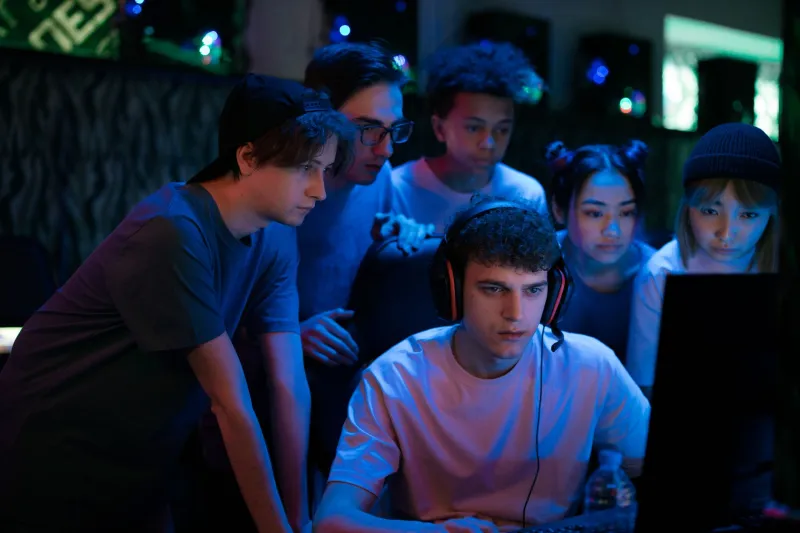
If you've spent any real time in the Lineage 2 community, you've seen it play out a dozen times. Someone joins your server buzzing with energy — they're active in Discord, they're showing up to grinding parties, they're asking all the right questions. Then somewhere around month five or six, the messages slow down. Their character stops logging in. And eventually you notice their name has gone gray in your clan roster.
It's not a new problem. But it's one that the L2 community has gotten surprisingly comfortable treating as inevitable. The truth is a little more complicated — and a lot more fixable — than most people want to admit.
Why Month Six Hits Different
The early game in Lineage 2 is genuinely exciting. There's discovery at every corner: new zones, new skills, the first time you survive a PK attempt or accidentally wander into a siege. The game throws enough novelty at new players that momentum almost maintains itself.
But around the mid-game stretch, something shifts. The XP curve steepens. The grind spots start to feel repetitive. The gear gaps between veteran players and newcomers become impossible to ignore. And maybe worst of all, the social infrastructure that made early leveling fun — the pickup parties, the shared grind spots, the natural overlap with other players at similar stages — starts to thin out.
You're not a newbie anymore, but you're not a veteran either. You're in the awkward middle, and the game doesn't do much to hold your hand through it.
For casual players especially, this is where things fall apart. Hardcore veterans can push through the grind on discipline alone. But the average American player juggling a job, a family, and maybe two or three other games in their rotation? They need the game to meet them halfway. And for a long stretch of Lineage 2's mid-game, it simply doesn't.
The Progression System's Blind Spot
Here's the thing about L2's progression design: it was built around a different era of gaming. Back when the original servers launched, MMO players expected to sink hundreds of hours into a single character. The grind was the point. Sitting in a party for six hours farming the same mob was a social event as much as it was a gameplay loop.
That context doesn't really exist anymore. Modern players — even dedicated ones — have shorter available sessions and higher expectations for feeling rewarded during those sessions. When the mid-game asks you to spend three weeks farming the same zone just to afford a single gear upgrade, a lot of people do the math and decide their time is better spent somewhere else.
The problem isn't that players are lazy or impatient. It's that the reward cadence breaks down. Early levels deliver constant feedback: new skills, new areas, new interactions. Mid-game progression compresses all of that into longer and longer stretches between meaningful milestones. The dopamine loop gets stretched until it snaps.
Guilds That Are Actually Doing Something About It
What's interesting — and honestly kind of inspiring — is that some guilds have stopped waiting for server admins or developers to fix this. They've built their own solutions from the ground up.
Take the approach that several mid-sized clans on popular private servers have started running: structured mentorship tiers. Instead of treating new recruits as warm bodies to fill out siege rosters, these guilds assign experienced players as dedicated mentors to anyone in their first sixty days. The mentor's job isn't just to answer questions — it's to actively loop new members into content that's appropriately scaled for where they are in progression.
The result is that mid-game players aren't grinding alone. They've got a direct line to someone who's been through it, and they're getting pulled into clan activities that give their progress a sense of purpose beyond just the XP bar.
Other guilds have gotten creative with internal economy systems. Rather than letting members figure out gear acquisition on their own — which usually means getting priced out of the market by established players — these clans run shared crafting pools, internal item lending programs, and even scheduled farming runs specifically designed around mid-game gear tiers. The idea is simple: if the game's economy is going to be brutal, your guild's internal economy doesn't have to be.
The Server Side of the Equation
Some server communities have gone even further, redesigning their content pipelines to address the mid-game cliff directly. A few private servers have introduced what amounts to a "mid-game event calendar" — rotating weekly objectives that give players in the 40-to-70 level range specific goals with meaningful rewards, separate from the endgame content that dominates most server attention.
It sounds simple because it is. But it works because it solves the core problem: mid-game players need reasons to log in that feel relevant to their current experience, not just the endgame content they're theoretically building toward.
Other servers have experimented with scaling the social infrastructure differently — creating dedicated mid-game hunting zones with built-in party matchmaking, or running server-wide events that specifically target progression milestones most players hit in that four-to-eight month window.
None of these are revolutionary ideas. But they share a common thread: someone looked at the data, noticed where players were dropping off, and actually tried to do something about it.
What This Means for the Broader Community
The six-month wall isn't going to disappear on its own. Lineage 2's core design isn't getting a ground-up overhaul anytime soon, and the mid-game has been a known pain point for years. But what's changing is the community's willingness to treat this as a solvable problem rather than just a feature of the game.
Guilds that invest in their mid-game members aren't just being altruistic — they're building more stable, more competitive clans in the long run. A player who makes it through month six and comes out the other side invested in your community is worth ten players who bounced because nobody gave them a reason to stay.
And for anyone reading this who's currently sitting somewhere in that awkward middle stretch, grinding through zones that feel endless with gear that feels perpetually out of reach: you're not alone, and it's not just you. The wall is real. But so are the communities that have figured out how to help people climb it.
If your current guild isn't one of them, it might be worth finding one that is.